
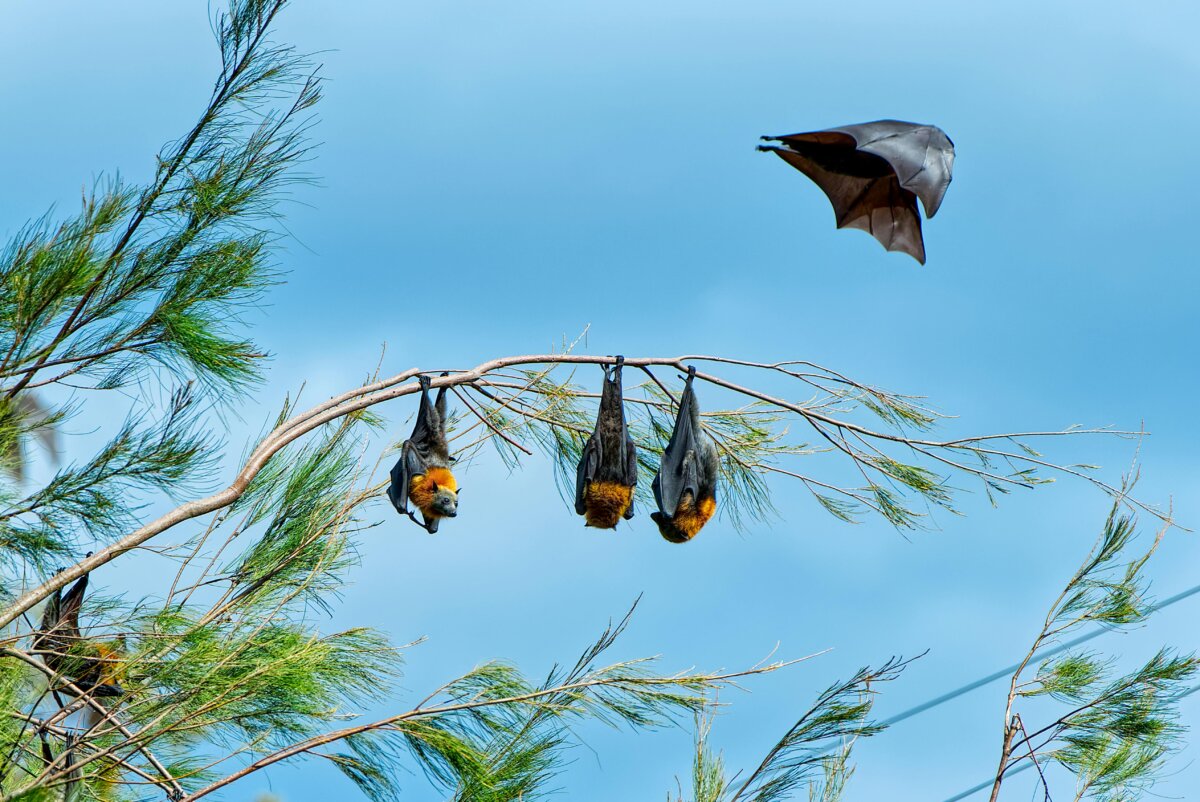
As recently reported in the New York Times, Australia’s flying foxes are very much underestimated and under-appreciated.
While local environmental experts have been singing their praises for decades, a new study published in Scientific Reports points to the fact that flying foxes, through the dispersal of seeds, are responsible for the creation of more than 91 million trees, a majority of them eucalypts.
For Australia’s economy, that means somewhere in the range of $195 million to $673 million per year contributed by the bats.
This case study, conducted by Gonzalez, Possingham, Biggs, et al., is the first of its kind within Australia to quantify the ecologic and economic impacts of grey-headed flying foxes.
The study was based on data from over 1,200 flying fox roosting sites gathered by the Commonwealth Scientific and Industrial Research Organisation (CSIRO), Australia’s national science agency.
The research created the term ‘the bat-ripple effect’ - the idea that these animals have a widespread impact on multiple ecosystems in a short span of time. This effect is the key to their success as dispersers of seeds all around Australia.
The study found that grey-headed flying foxes are predicted to facilitate the planting of an estimated 13.9 million trees each year. This results in an estimated AUD $611 million economic contribution towards the eucalypt timber industry each year. This equates to about 5% of the total value of timber and forest industries in 2022-2023.
What are flying foxes?
Grey-headed flying foxes are the largest bats in Australia. These megabats eat fruit and nectar. They are a threatened disperser and pollinator species. This means that they disperse seeds and pollinate plants (especially eucalyptus trees) over large areas of Australia. They reside mainly in south-eastern Australia, including New South Wales.
Bats and their bad rap
Bats are widely known as disease carriers. As a result, the Australian Government regularly publishes PSAs about the dangers of touching bats. They are also observed to be overrunning towns with faeces. They are subjected to habitat destruction with human developments in and around their dwelling areas, causing them to enter urban areas.
This new study shines the spotlight on their important role in our ecosystems.
What can we do to help them?
We can all do our part to spread awareness of these furry friends! Learning more about grey-headed flying foxes is a start and the Flying-Fox Expert Group offers sound information.
Article by Katie Murray