
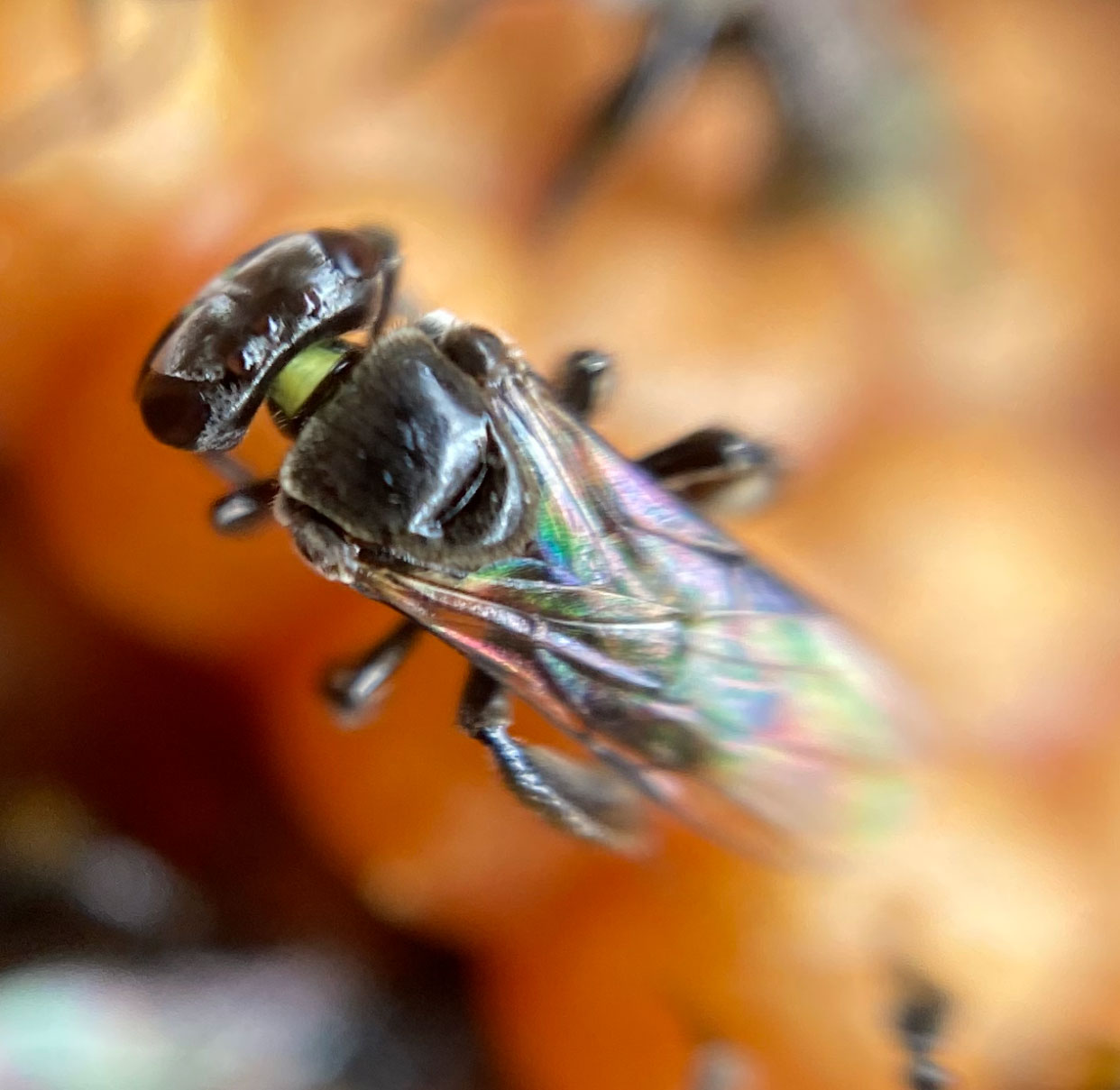
This May 20th marks World Bee Day 2025 - a day to celebrate our pollinators and the many integral roles they play in our ecosystems. The 2025 theme is ‘Bee Inspired by Nature to Nourish us All’, emphasising the irreplaceable role of bees in both our global agriculture systems, and our natural ecosystems. While the European honeybee is widely celebrated, on this World Bee Day, PlantingSeeds wants to highlight the importance of our native Australian bees, with over 1700 species we can learn about and admire!
Bees & Australian food security
In terms of food security, the importance of bees simply can’t be overestimated. Bees are imperative for 35% of Australian crop pollination, but benefit up to 75% of global food crop types, producing the fruits, vegetables, nuts and seeds that we enjoy. Many Australian crowd-favourites such as almonds, avocados, blueberries and mangos simply wouldn’t make it to our plates without the pollination bees provide.
More than just produce, bees also indirectly support meat production by pollinating crops such as canola, lucerne and clover for livestock feed. This contribution is enormous for our beef and lamb industries, with honeybees estimated to produce $580 million worth of Australian canola and $450 million worth of lucerne and clover
What about native bees?
While the introduced European honeybee gets a lot of attention, our native bee species play their own important role in Australia’s ecosystems and food systems. Roughly 60 million years ago native bees began co-evolving with the Myrtaceous plant family, making them perfectly adapted to pollinate many iconic Australian species such as Eucalyptus, Myrtle and bottlebrushes.
Over time, native bees have diversified into over 1700 species, with many more predicted to still be discovered. Native bee pollination is necessary for many flowering native plants to reproduce and flourish, in turn providing food and habitat sources for Australian wildlife. While we’ve only just scratched the surface of Australian native bee research, the impacts of our native pollinators can be seen all around in the beauty of the Australian biosphere. In short – our unique Australian environments need native bees.
Unlike their European counterparts, over 99% of native bees don’t produce honey and are solitary creates, crafting their own habitats rather than living in hives. For instance, the Fire-Tailed Resin Bee (Megachile mystaceana) builds homes in narrow timber holes, and the Blue-banded bee (Amegilla cingulata) burrows in sandy soil to lay eggs. One exception of just over 10 species is the Sugarbag bee (Tetragonula carbonaria) which lives in a spiral hive, producing small amounts of a lemony, watery honey.
While European honeybees are naturally more adapted to pollinating European crops, many native bee species have proven to be effective pollinators of several introduced species. For instance, Blue-banded bees (Amegilla cingulata) are great pollinators of tomato, chilli and basil plants, while Reed Bees (Exoneura) pollinate introduced crops such as blackberries and raspberries.
Overall, the habits and appearances of native bees are almost as varied as the number of different species. This adds to the diversity to Australia’s insect community but also introduces the need for education on native bee-friendly behaviour.
To learn more about the different native bee species, read ‘The ABC’s of Aussie Bees’ on our website!
Challenges facing our native bees:
Unfortunately, native bee populations have been under a lot of pressure in the past few decades due to a myriad of factors. Arguably, habitat loss from urbanisation and agriculture is the largest threat facing our native bees. Native bee populations depend on the nectar and pollen from certain flowering plants to fuel themselves and survive. As deforestation and land clearing occurs for agricultural activities and urbanisation, native bee populations are left disconnected from their habitat and food sources. Specialist native bee species are particularly at risk, as they have evolved to exclusively pollinate very specific plant types.
As well as removing food sources, native land clearing can also obstruct native bees from finding appropriate habitat and nesting sites. For instance, the Teddy bear bee and Blue banded bee build their habitats by burrowing in sandy soils – a habitat-type lost with construction activities that pave over natural ground covers with cement and asphalt.
Pesticide-use is another major challenge facing both introduced and native bees. When pesticides are sprayed on flowering crops, native bees are often poisoned while trying to collect nectar. This poses a serious challenge for local population numbers near agricultural fields and gardens that routinely spray pesticide.
Climate change related extreme-weather events, such as bushfires and floods, also put exacerbated pressure on native bee populations. For instance, the 2019-2020 Black Summer Bushfires were estimated to have increased the number of threatened Australian native bee species five-fold, owing to mass fatalities and destroyed habitat.
What can you do for native bees?
While it’s undeniable that bees are facing tough challenges, there are many actions that we, as individuals and communities, can take to support our native bee species.
An easy step that can be taken is stopping the use of pesticides on flowering plants. In lieu of traditional pesticides, gardeners can choose from a wide range of bee-friendly alternatives such as netting garden beds and crushed eggshells.
Planting native-bee friendly plants is another powerful step individuals and community centres can take to mitigate the challenges of native bee habitat loss. At PlantingSeeds, our B&B highway initiative has been working to expand and connect urban native plant corridors, reaching over 220 locations so far! Whether at a school, at a community garden, on a verge, home garden or on a patio balcony, every native species planted contributes to cumulative habitats for our native bees, supporting their survival.
If you’re looking to plant native-bee friendly plants in your own garden, you can check out PlantingSeed’s Threatened to Thriving Map to identify the specific pollinators that are local to you, and the plants they need to thrive. Additionally, you can get in contact with your local schools to encourage them to take part in our B&B highway (that is, if they haven’t already!)
An important step we can all take is keeping our next generations engaged and connected to our native species and ecosystems. If you’re trying to engage little ones in the garden or feed their curiosity about Australian pollinators, biodiversity and our food system you can check out the fantastic book “The Bee Squad: Boosting biodiversity in your neighbourhood”, by our very own CEO Dr Judy Friedlander.
From our hive to yours, this May 20th Bee the change you want to see and join us in loudly celebrating just how incredible our native bees are!
References + Extra Resources:
Official World Bee Day Website
UNSW Press Books – The Bee Squad
PlantingSeeds Article – The Bee Squad
Australian Government – Honeybees
FAO - Global Action on Pollination Services for Sustainable Agriculture
Museum Victoria – Interview with an Expert
NSW Gov – Australian Native Bees
PlantingSeeds – The ABC’s of Aussie Bees
PlantingSeeds - Pollinators - Why You Should Create Habitat and What to Consider
The University of Adelaide - Extinction risk of native bee populations increased by bushfires
PlantingSeeds - Banishing Bad Bugs: The Power Of Natural, At-Home Pesticides